
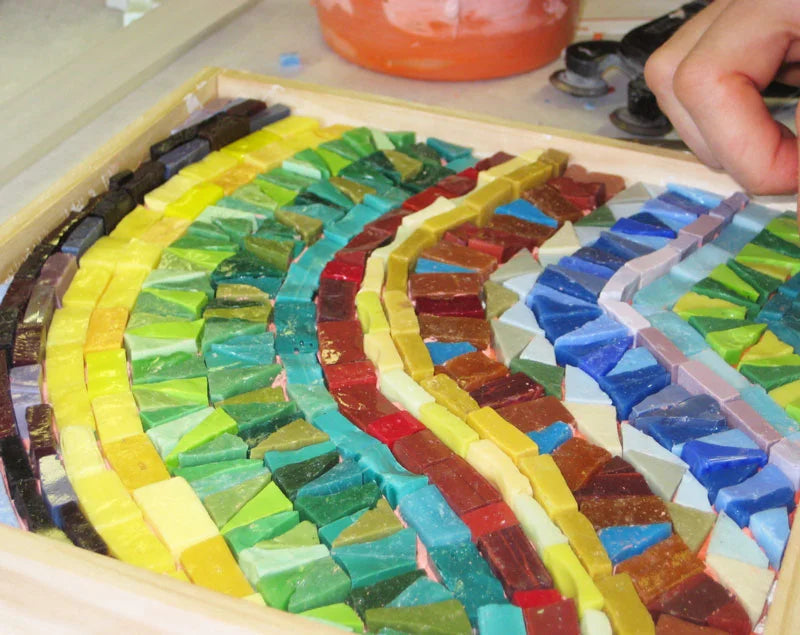
The term tesserae (tessera, the Latin word for 'a small cube') refers to the individual pieces used to create a mosaic. The choice of tesserae is perhaps the single most important decision you make, as it dictates the project's texture, reflectivity, durability, and overall aesthetic.
Here is a guide to the most popular tesserae materials and their ideal applications.
1. Glass Tesserae
Glass is the most common modern mosaic material due to its brilliant colors, affordability, and workability.

| Feature | Details | Ideal Use |
| Look | Vibrant, reflective, often translucent or opaque. | Indoor wall art, jewelry, small decorative items, light-catching projects. |
| Durability | Excellent for indoors. Can break if subjected to high impact. | Interior art. |
| Workability | Easily cut with wheeled glass cutters or nippers. | Highly versatile; great for detailed work. |
| Pro Tip | Translucent glass looks best when mounted on a white surface, which allows light to reflect back through the color. |
2. Smalti (Byzantine Glass)
Smalti is a specialized, traditionally made Italian glass. It is the material of the magnificent Byzantine mosaics.
| Feature | Details | Ideal Use |
| Look | Opaque, deeply saturated color. Often has a slightly rough, uneven surface texture. | Fine art mosaics, commissions, traditional and religious art. |
| Durability | Very durable and colorfast. | Interior or exterior art; known for lasting centuries. |
| Workability | Traditionally cut with a hammer and hardie (a blade set into a wooden block). | Best for creating expressive texture and rich color depth. |
| Pro Tip | Smalti is typically set at slightly different angles to catch the light unevenly, creating a shimmering, almost wet effect. |
3. Ceramic Tile
Ceramic is the most accessible material, often purchased as small, ready-made craft tiles or created from broken household ceramics.
| Feature | Details | Ideal Use |
| Look | Opaque, flat finish. Ranges from perfectly uniform squares to irregular, broken (trencadís) pieces. | Functional items like tabletops, kitchen backsplashes, stepping stones. |
| Durability | Extremely durable and weather-resistant. | Both interior and exterior applications. |
| Workability | Cuts well with ceramic nippers but can shatter if pieces are too small. | Excellent for filling large areas quickly and economically. |
| Pro Tip | Use broken plates or mugs (the trencadís technique) for a charming, rustic, or repurposed look. Ensure the edges are not too sharp post-cutting. |
4. Natural Stone & Pebbles
Stone offers a classic, earthy texture, favored in ancient Roman floor mosaics.

| Feature | Details | Ideal Use |
| Look | Matte, rugged, natural tones (marble, slate, travertine, river stones). | Floor installations, fountains, architectural features, garden mosaics. |
| Durability | Unmatched. Stone is the most resilient material. | High-traffic areas and harsh outdoor environments. |
| Workability | Hard stones (like marble) require specialized tools (a hammer and hardie or a wet saw). Pebbles require no cutting. | Best for texture-focused pieces and areas needing maximum longevity. |
| Pro Tip | Wet natural stone before grouting to reveal its true color—this ensures the grout color selection complements the material when the mosaic is finished. |
Making the Right Choice
When starting a project, ask yourself these three questions:
-
Where will the mosaic live? (Indoor/Outdoor/Wet Area)
-
Does it need to be functional? (Floor/Tabletop vs. Wall Art)
-
What level of detail do I need? (Small, uniform tesserae for fine detail; larger, irregular pieces for abstract designs).